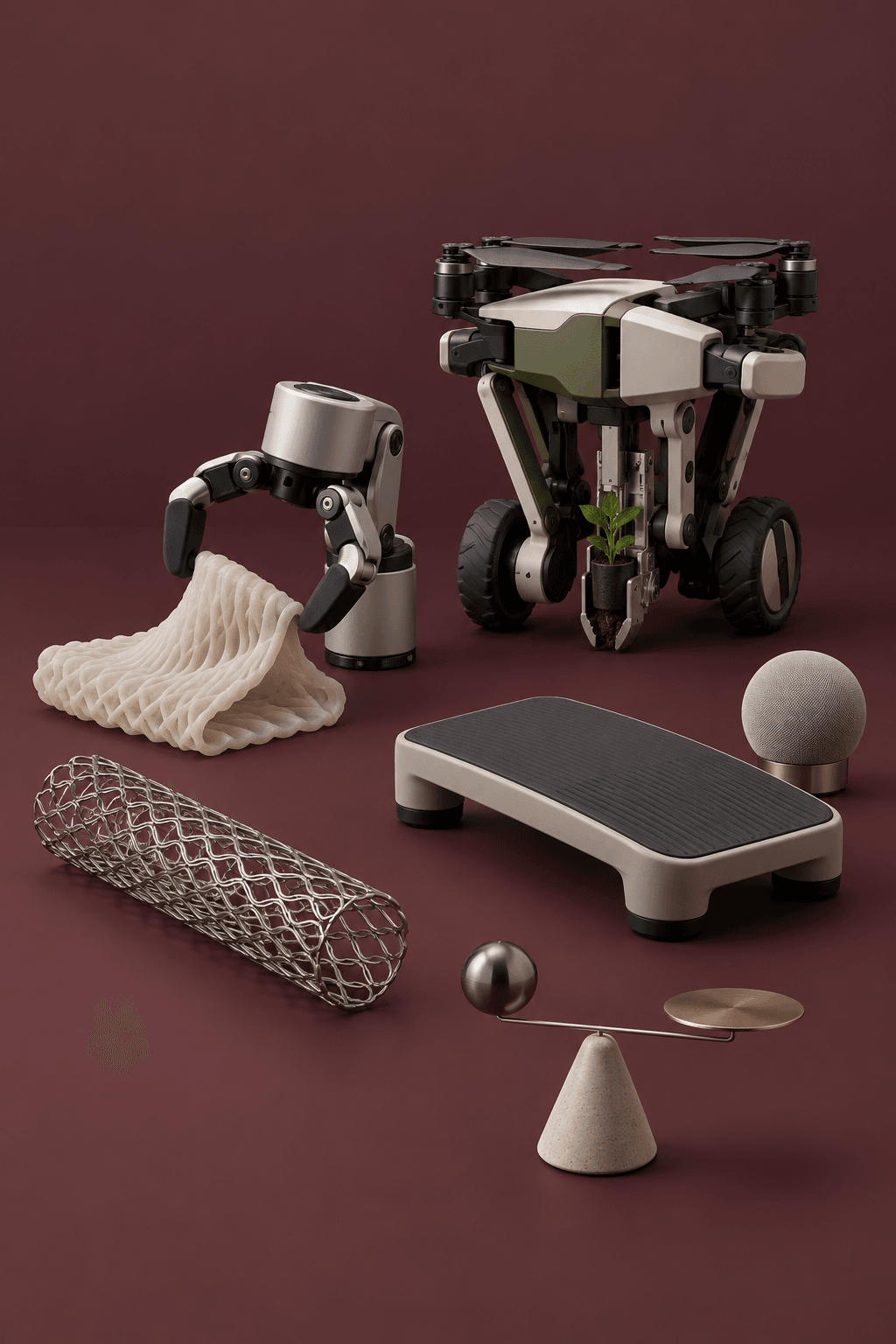
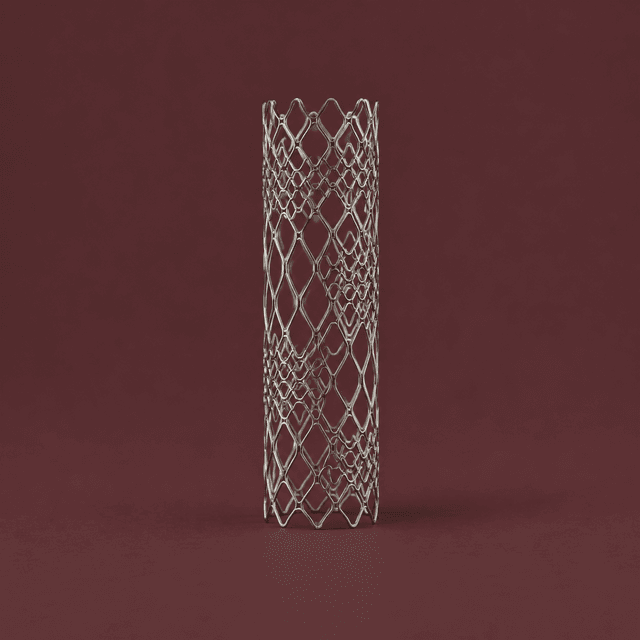
npj Metamaterials published an algorithmic route to laser-print fully connected nickel-titanium braids in one build, then tune local fiber density, thickness, and discontinuities for vascular-device concepts. Chemical etching followed by electropolishing reduced mean strut thickness from 318 to 170 micrometers and improved uniformity; radial tests placed the braided W9 and W12 samples within or below reported commercial ranges for chronic outward force and stiffness. The team demonstrated stents, valve frames, clot retrievers, flow diverters, bifurcations, and fenestrated structures. These are mechanical proofs, not implants: testing used one crimp cycle, while fatigue, corrosion, nickel release, biocompatibility, and in-vivo performance remain open. The useful expansion sits in geometry—compliance can change along one continuous structure.
A question for designCould one printed braid vary support by location without turning validation, fatigue inspection, or retrieval into a new burden?*1