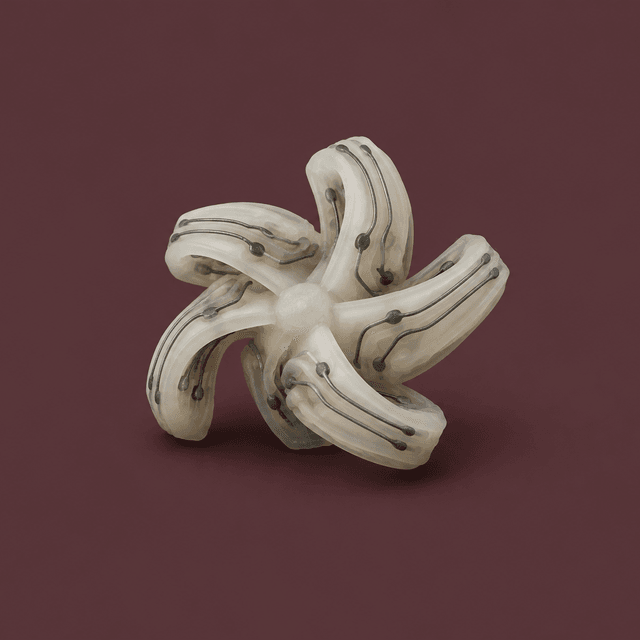
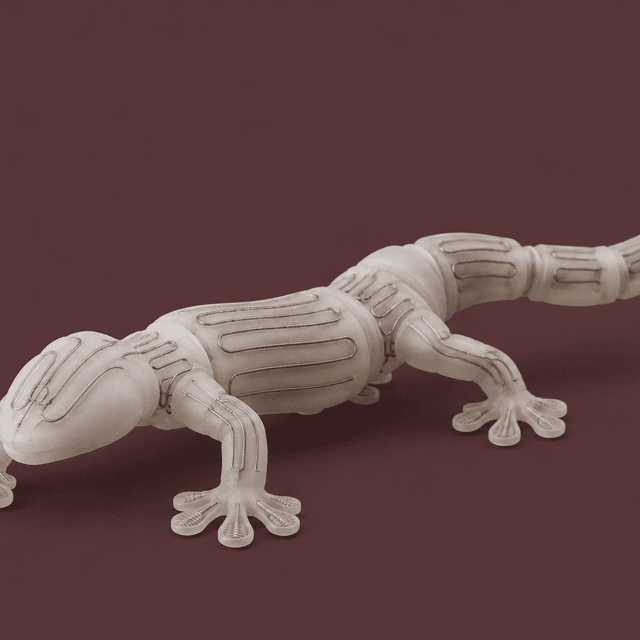
A Nature Communications study presents a six-spoke elastomer robot with embedded liquid-metal channels that uses Laplace forces in a static magnetic field. The small soft body switches among more than nine locomotion modes in under 0.35 seconds, including rolling at 818 millimeters per second, or 26 body lengths per second, crawling, jumping, and swimming. Folding reduces its occupied volume by 79%, and the team tested navigation across obstacles, gelatin, viscous fluid, a printed stomach surface, and a porcine stomach. These are controlled demonstrations toward biomedical use, not evidence of autonomous clinical operation.
A question for designCould one compliant body resolve transitions between modes through its own geometry, while making the limits of external actuation and control legible?*1