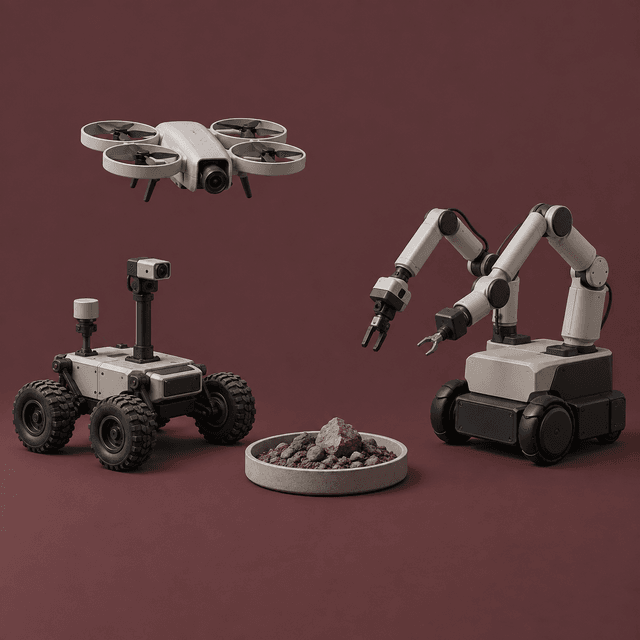
NASA field-tested a three-robot science team that weighs scientific value, travel, capability, risk, and prior intent before assigning work, but published no task-success benchmark. In a simulated shop, an ACM study with 32 participants found that the most effective operator role changed with automation reliability. A robotics preprint likewise found that vibration and acoustic sensors fell to nearly the same accuracy under an unseen payload despite different in-distribution rankings. GRID and Maven describe deployment loops that learn from field operation; their onboarding, uptime, and transfer figures remain company claims. The recurring evidence is not a ladder toward maximum autonomy. It is a case for authority that changes with reliability and the cost of being wrong.
A question for designCould a system reduce its authority as reliability falls while preserving one stable, understandable role for the person supervising it?*11 *12 *13 *14 *15 *16